
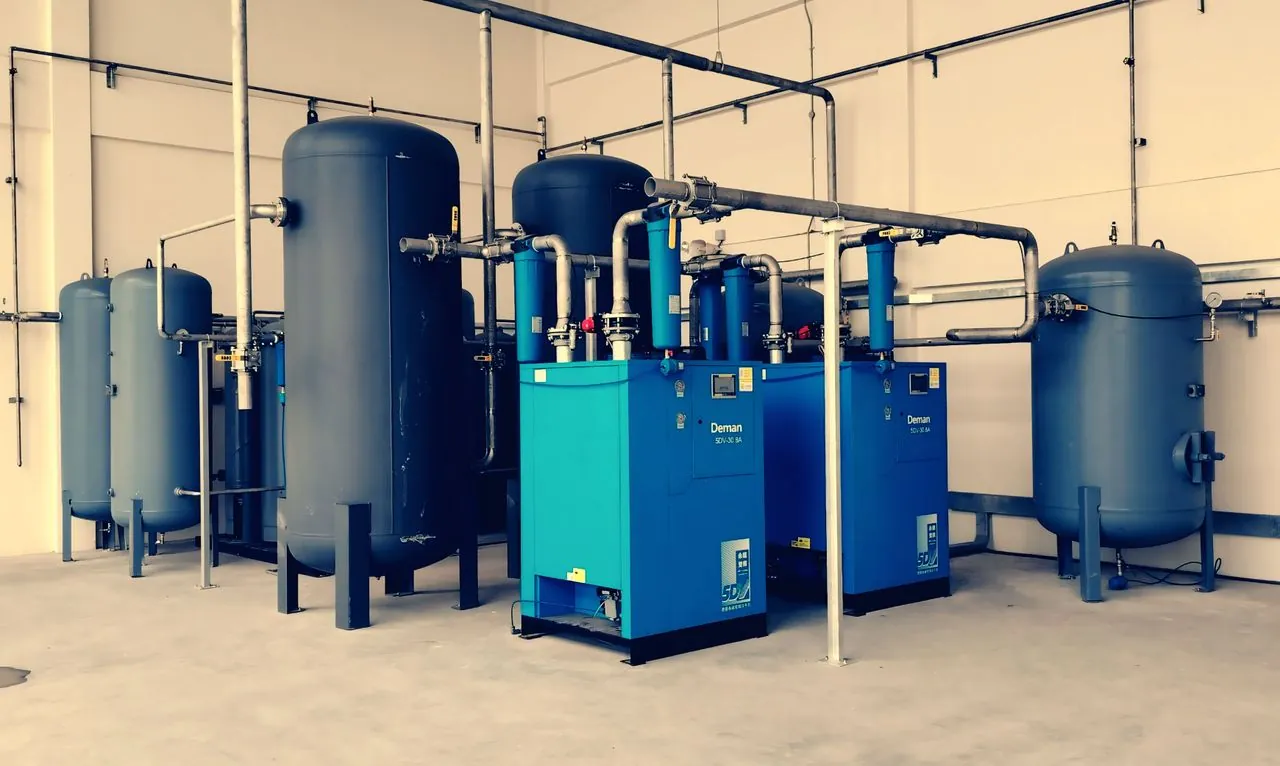
Compressed air is one of the most expensive utilities in a plant, and the compressor is its heart. Generating compressed air consumes, on average, 8–10% of total plant electrical energy in a typical manufacturing facility. A disciplined maintenance routine is therefore both a reliability imperative and a direct contributor to energy efficiency — a poorly maintained compressor can consume 10–20% more energy than a well-serviced unit running the same duty.
Understanding the True Cost of Compressed Air
The capital cost of an air compressor is typically less than 20% of its total cost of ownership over a 10-year service life. Energy dominates — at current industrial electricity rates, the annual energy cost of a 75 kW compressor running at 70% load factor can exceed its purchase price within 18–24 months. This means that decisions made at the design and procurement stage — operating pressure, motor efficiency class, control strategy — have a larger financial impact than most operators appreciate. Every 1 bar reduction in system pressure saves approximately 6–7% of compressor energy consumption.
Manage Leaks and Air Quality
Leaks can waste 20–30% of compressor output in poorly maintained compressed air systems. A single 3 mm hole in a distribution line wastes approximately 35 l/min at 7 bar — equivalent to running a 4 kW compressor 24/7 just to supply that one leak. Routine ultrasonic leak surveys, combined with prompt repair, consistently deliver the shortest payback of any compressed air efficiency measure. Air quality — filtration, drying, and oil removal — matters equally. Wet, contaminated air damages pneumatic valves and cylinders, shortens tool life, and causes product quality failures in painting, coating, and food processing applications.
- Survey and fix air leaks with an ultrasonic detector — target <5% system leakage
- Change intake filters, oil separators, and coalescing filters on the OEM schedule
- Monitor oil quality and compressor discharge temperatures — trend data to detect deterioration early
- Drain condensate automatically — manual drain valves are routinely left closed
- Verify desiccant dryer performance regularly — pressure dew-point should be ≤ -20°C for most duties
- Choose oil-free compressor units where clean air quality is non-negotiable
Developing a Preventive Maintenance Schedule
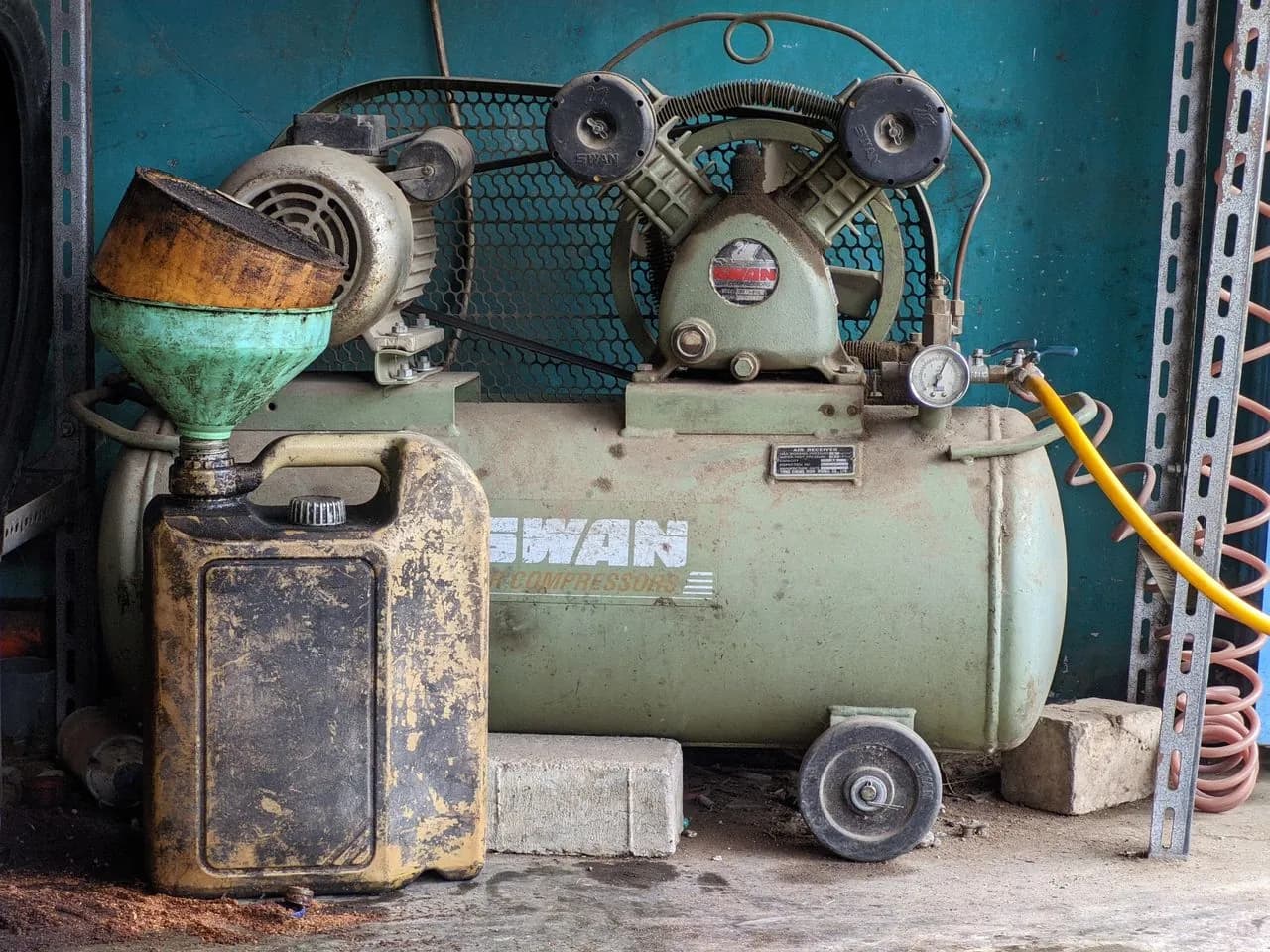
Effective compressor maintenance is built around hours-based intervals, not calendar months — a compressor running 24/7 accumulates 8,760 hours per year; one running a single shift accumulates around 2,000 hours. Using calendar months for both leads to either over-maintenance (wasted cost) or under-maintenance (reliability risk). Always follow the OEM schedule for your specific unit, but typical screw compressor intervals look like the following.
- 500–1,000 hrs: check oil level, inspect air/oil separator differential pressure
- 2,000 hrs: change oil, oil filter, air intake filter, and check separator element condition
- 4,000 hrs: inspect valves (reciprocating), check coupling and belt tensions, test safety valves
- 8,000 hrs: overhaul unloader valve, inspect cooler fins, check motor insulation resistance
- 16,000–24,000 hrs: full airend or cylinder/piston overhaul per OEM recommendation

Oil-Free for Clean Applications
In pharmaceutical, food, electronics, and semiconductor applications, even trace oil contamination causes product failures and regulatory non-compliance. Oil-free compressors — whether two-stage dry-screw, oil-free scroll, or oil-free reciprocating designs — deliver Class 0 oil-free air per ISO 8573-1 without requiring downstream oil-removal filtration. The capital premium over oil-injected units is real but quickly recovered when you factor in downstream filter maintenance costs, oil contamination risk, and the compliance burden of monitoring and documenting oil content in the compressed air supply.
Choosing Between Screw and Reciprocating Compressors
Screw compressors are the preferred choice for duties above approximately 5 kW where continuous or near-continuous operation is required. They deliver smooth, pulse-free air, have fewer wear parts than reciprocating designs, and handle variable demand well with VSD (variable-speed drive) control. Reciprocating (piston) compressors excel in small-capacity, high-pressure duties and in intermittent-use applications. For very high pressures (above 25 bar) or small flow rates, reciprocating units remain the most cost-effective choice. Oil-free scroll compressors occupy a niche for low-pressure, very-low-contamination duties in laboratory and medical applications.
“A compressor running on genuine oil, at the right change interval, with clean filters and a maintained drain system will outlast two units that are neglected and patched.”
— Energy Tech Solution Engineering
Energy Tech Solution supplies Anest Iwata oil-free and lubricated compressors — renowned for their low noise, high energy efficiency, and class-leading oil-free performance — with full engineering support, commissioning assistance, and genuine OEM spares for the Indian market.